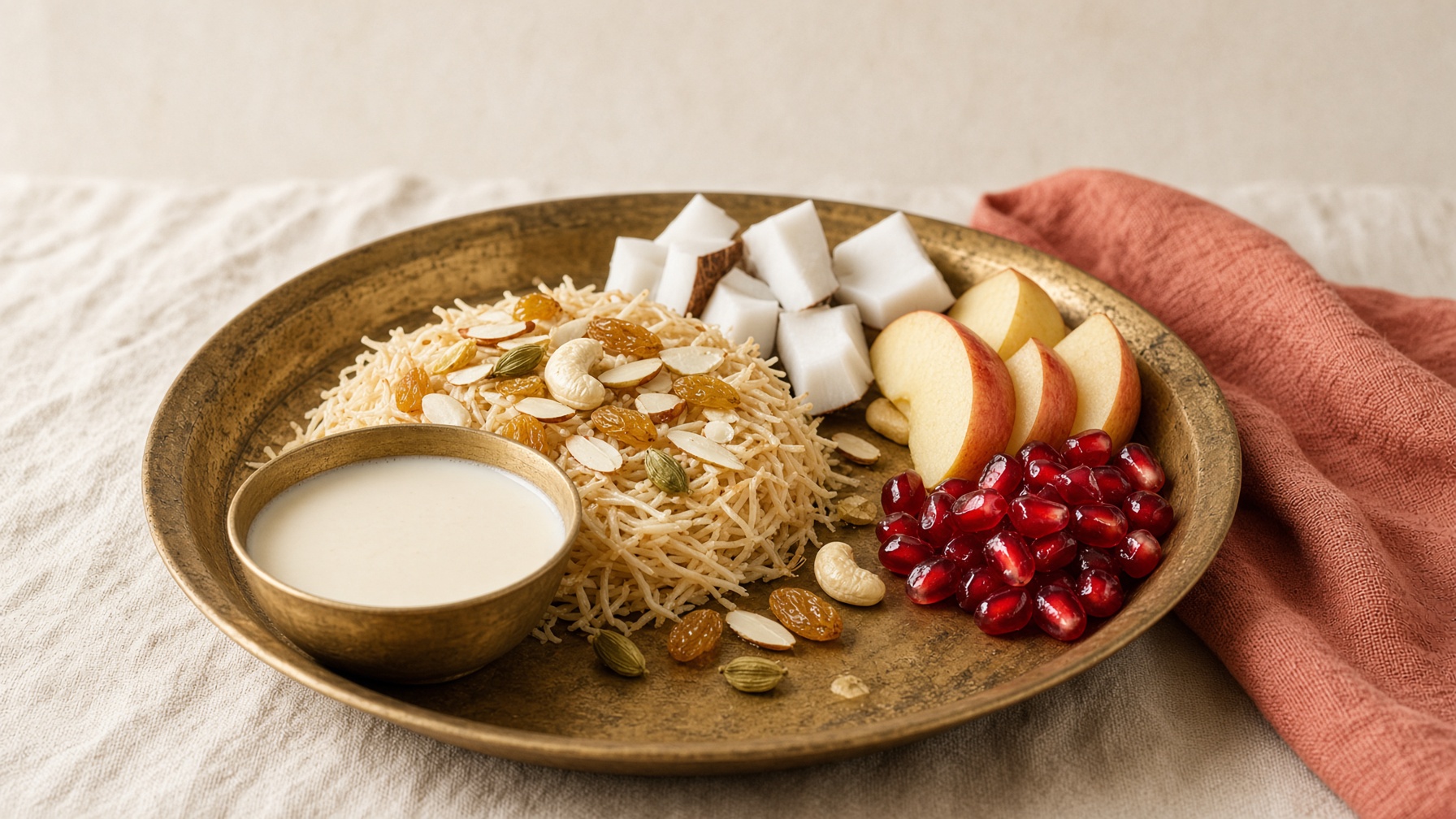
Karwa Chauth begins in the dark, with pheni, milk, and fruit on a brass plate. The fast is long. The plate is small, and it has to last until the moon.
Karwa Chauth is not a dinner party. In north India it is a fast from sunrise to moonrise, often without water, kept mostly by married women for the life of a husband. The kitchen’s job is earlier than that. Sargi is eaten before the sun, while the house is still quiet: a brass plate, not a banquet.
On it, pheni — those pale nests of fried vermicelli — a cup of warm cardamom milk, coconut, almonds, a few raisins, and fruit. Apple, banana, pomegranate. Someone who loves you set it out. In many houses that someone is a mother-in-law. The custom is older than the film version of the sieve and the moon, and kinder when the plate is actually good.
What the day is, and is not
After sargi the kitchen goes still. No onion tempering, no chai passed around the person who is fasting. Puja is in the evening. The fast breaks when the moon is up, water first, then food. A thali can follow — puri, a dry potato, kheer — but it is not the point of this page. The point is the plate that makes a long day possible.
A fast without a decent sargi is just thirst. A fast with pheni and milk is a ritual that remembered the body.
This is a vegetarian plate, with dairy. It is not a vrat that bans milk. If the house keeps a stricter fast, leave the pheni and keep the fruit and coconut. If you are not fasting at all, it is still a beautiful breakfast on 29 October: crisp vermicelli, warm milk, and fruit, eaten before the day gets loud.
Cook it the night before if dawn is unkind. Warm the milk again. Do not pour it over the pheni until the plate is in a hand. Crisp beside sweet is the whole trick.